
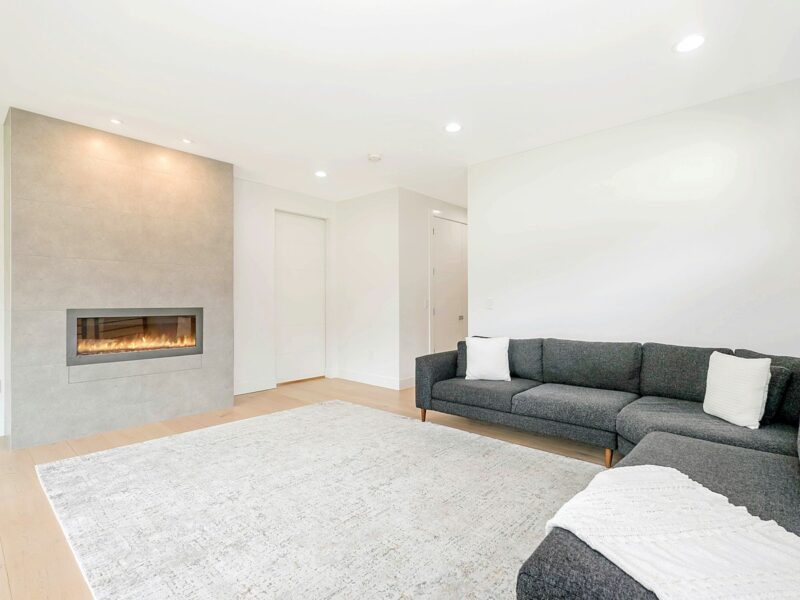
Living Room Rug Selection: A Procurement Checklist for Commercial Projects
Specifying a rug for a hotel lobby lounge, a serviced apartment, a show flat, or a members’ club isn’t the same job as picking one for your own front room. The failure modes are different. In a commercial setting, a rug has to survive trolley wheels, housekeeping vacuums running daily, spilled coffee at 9 a.m. and red wine at 11 p.m., and a design review six months later where someone asks why the edges are curling. Getting it right starts with understanding what you’re actually buying.
This guide walks through the rug types you’ll encounter in residential and hospitality living spaces, how each behaves under real traffic, and where the money goes. It’s written for the person signing the purchase order, not the person browsing a showroom on a Saturday afternoon.
Hand-Knotted vs Machine-Made Rugs: Material and Cost Trade-Offs
The first fork in the road is construction method, and it drives almost everything else — price, lead time, cleaning method, and how the rug ages.
Hand-knotted rugs are built knot by knot on a loom, usually from wool, cotton, or silk. A dense 9×12 in a fine knot count can take a single weaver several months, which is why the price lands anywhere from $1,200 to well over $8,000 depending on origin, knot density, and fiber. The upside is real: the pile compresses rather than crushes, the pattern holds its definition for decades, and a good wool rug develops a patina instead of looking tired. The downside for a commercial buyer is lead time. Custom sizes routinely run 12 to 20 weeks, and that’s before shipping.
Machine-made rugs use power looms and synthetic fibers — nylon, polypropylene (olefin), or polyester — or wool blends. A machine-made 9×12 in solution-dyed nylon typically runs $300 to $1,100 at trade pricing, and stock sizes ship in days. Pile height and density are consistent from roll to roll, which matters when you’re ordering 40 identical units for a hotel renovation.
- Hand-knotted: natural fibers, high art value, long lifespan, 12–20 week lead times, premium pricing, specialist cleaning required.
- Machine-made: synthetic or blended fibers, uniform quality, 3–10 year lifespan under commercial traffic, fast delivery, cleanable in-house.
- Decision driver: expected footfall and replacement cycle. A 200-room hotel corridor needs a machine-made product it can replace in phases. A boardroom or presidential suite justifies the hand-knotted piece.
“We stopped putting hand-knotted wool in the lobby lounge after the second coffee incident. Now we spec solution-dyed nylon there and save the good stuff for the private dining room, where nobody’s walking through with a tray.” — Facilities manager, 180-room boutique hotel
One detail worth flagging early: backing construction affects performance as much as face fiber. If you’re comparing quotes, read this field manual on carpet backing materials before you sign — action backing, jute, and synthetic secondary backings behave very differently under castor chairs and trolley traffic.
Small Accent Mats and Traditional Rugs for Layered Living Rooms
Not every living space needs one big rug. Layering — a smaller accent mat over or beside a larger area rug — is a common hospitality styling move because it lets you change the look without replacing the whole floor covering.
Accent mats are the workhorses. A 2×3 or 3×5 mat in front of a sofa, at a doorway, or under a coffee table adds depth and takes the brunt of the dirt. They’re cheap enough to rotate seasonally and small enough to launder or spot-clean in under an hour. In a serviced apartment, a washable accent mat at the entry point can cut the deep-clean frequency of the main rug noticeably.
Traditional rugs — classic medallion and border patterns, often in the Persian or Oriental idiom — are the other half of the layering equation. They’re typically thick-piled, heavily patterned, and warm underfoot, which makes them a natural fit for period properties, country-house hotels, and any living room where the brief says “cosy” rather than “minimal.” The dense pattern is also a practical asset: it hides stains and traffic marks far better than a solid colour.
For bathroom-adjacent or en-suite living areas, a tufted microfibre mat is worth specifying separately — see the microfibre tufted bathroom carpet range for products built around moisture and quick-dry requirements rather than living-room aesthetics.
Minimalist Modern Rugs: MUJI-Style Simplicity for Contemporary Homes
Neutral, low-contrast, natural-fibre rugs in oatmeal, greige, stone, and off-white are the default choice for contemporary residential interiors — and they’re popular in commercial projects for a simple reason: they don’t fight with anything.
The appeal is straightforward. A flat, undyed-look rug in a soft wool or cotton blend sits calmly under mid-century furniture, Scandinavian oak, and the ubiquitous grey sofa. It photographs well for marketing suites. And because there’s no pattern to misalign, installation across multiple units is forgiving.
Maintenance is the trade-off you need to price in. Light neutrals show every mark, so a machine-washable or solution-dyed option is worth the premium in any space with food or beverage service. Look for rugs that can be spot-cleaned with a neutral detergent and cold water, and check whether the manufacturer specifies a commercial cleaning method — “dry clean only” is a red flag for a rental or hotel application.
Durability varies widely in this category. A well-made flatweave in a wool blend can hold up for 8 to 12 years in a residential setting; a cheap polypropylene version may flatten within two. Ask for pile weight in grams per square metre and compare like for like. Anything under roughly 1,200 gsm is going to feel thin underfoot within a couple of years of daily use.
Persian Rugs: Artistry and Investment Potential
Persian rugs occupy a different category entirely. These are hand-knotted pieces with intricate curvilinear designs, often from named weaving regions, and they’re bought as much for provenance as for floor coverage.
The case for them in a commercial project is prestige. A hand-knotted Persian in a hotel library, a private members’ lounge, or an executive residence signals quality in a way that no machine-made product can. The materials — typically high-grade wool with a cotton foundation, sometimes silk accents — give a density and comfort that synthetics can’t replicate. A well-maintained piece can genuinely hold or increase its value over 20 to 30 years, which is why some buyers treat them as a capital asset rather than a consumable.
The case against is operational. They need professional cleaning every 12 to 24 months (budget $150–$400 per piece depending on size), they shouldn’t sit in direct sunlight for long periods, and they’re a theft and damage risk in semi-public spaces. Insurance and security need to be part of the conversation before the purchase order goes out.
If you’re specifying Persian-style rugs for a project, be clear about whether you’re buying genuine hand-knotted pieces or machine-made reproductions of Persian designs. The visual difference at three metres is small; the price difference is a factor of ten, and the maintenance regime is completely different.
Modern Abstract Rugs: Bold Colors for Young Families
Abstract designs — irregular colour fields, gestural patterns, high-contrast palettes — are the fastest way to inject energy into a flat, neutral living space. They’ve become standard spec for build-to-rent apartments, student accommodation common rooms, and family-oriented hospitality.
The practical advantage is forgiveness. Busy, multi-colour patterns disguise spills, footprints, and the general wear that comes with children, pets, and high turnover. A rug with six colours in it will look the same after a year as it did on day one; a cream flatweave won’t.
Pairing is flexible because the rug itself is the focal point — you can keep furniture neutral and let the floor do the work. That’s helpful in a rental or staged property where you can’t repaint between tenancies. It’s also a cost-effective way to refresh a room without touching the soft furnishings.
Watch the fibre choice. Bold abstract designs are often printed or tufted onto polypropylene, which is fine for durability but can fade in strong sunlight. If the room has south-facing glazing, ask about lightfastness ratings — a minimum of 4 on the blue wool scale is a reasonable benchmark for commercial interiors.
Outdoor-Grade Rugs for Balcony-Connected Living Rooms
If the living room opens onto a balcony, terrace, or garden, an indoor-outdoor rug extends the usable floor area and makes the transition feel intentional rather than accidental.
These rugs are built from solution-dyed polypropylene or recycled PET, woven or tufted so water drains through rather than pooling. They resist mould and mildew, tolerate UV exposure, and can be hosed down and left to dry in a couple of hours. A 5×8 outdoor rug typically runs $120 to $400, which makes them a low-risk specification for a rental or a high-turnover hospitality space.
Pattern matters more than you’d think outdoors. Fresh geometrics and coastal stripes hide dust and pollen well; solid dark colours show every speck. And check the edge binding — a bound edge is what stops an outdoor rug from fraying after a season of being dragged across a balcony threshold.
For projects with a leisure or landscape element, our 15mm outdoor artificial golf putting green carpet is a good example of how far outdoor-grade synthetic surfaces have come — the same fibre engineering that makes a putting green survive weather is what makes an outdoor living rug last.
Material, Size, Style, and Maintenance: Key Rug Selection Factors
Once the type is settled, four variables decide whether the purchase works: material, size, style, and upkeep. Get any one of them wrong and you’ll be replacing the rug inside two years.
Material. Wool gives the best comfort, resilience, and natural flame resistance — it’s the default for premium residential and hospitality living spaces. Solution-dyed nylon is the durability champion for high-traffic areas. Polypropylene is the budget option: stain-resistant and cheap, but it flattens faster and holds oil-based stains. For a full comparison of how these behave in commercial settings, our commercial carpet size guide covers the specification basics.
Size. Measure the room and the furniture footprint, not just the floor. The common rule: a living room rug should sit under the front legs of all seating, with at least 20cm of rug extending beyond each sofa edge. In an open-plan space, leave 30–45cm of bare floor between the rug edge and the wall so the room doesn’t feel shrink-wrapped. For a standard 3-seater sofa plus two armchairs, a 240x340cm rug is usually the right call; anything smaller looks like a bath mat with ambitions.
Style. Match the rug to the room’s dominant language, not to your personal taste. Minimal interiors want flat, tonal rugs. Period interiors want pattern and pile. Transitional spaces — most hotel lounges — want something in between: a subtle geometric or a low-contrast traditional design.
Maintenance. Be honest about who’s cleaning it and how often. A wool rug needs professional cleaning every 12–18 months; a polypropylene rug can be cleaned in-house with a wet extractor. If your housekeeping team can’t handle the care regime, the rug will fail regardless of how much you spent on it. Our piece on five signs your commercial carpet maintenance plan is failing is a useful diagnostic before you add another textile to the schedule.
Budget realistically, too. For a commercial living space, expect to spend $8–$25 per square metre on machine-made product and $80–$400 per square metre on hand-knotted. Add 10–15% for underlay, edge binding, and delivery. And factor in a replacement reserve — even the best rug has a service life.
If you’re working through a multi-unit project and need to confirm lead times, custom sizing, or sample availability, the fastest route is to contact the team directly with your schedule and quantities.
Weigh the four factors against each other rather than in isolation. A beautiful wool rug in a room with three dogs and no professional cleaning budget is a bad buy; a cheap synthetic in a presidential suite is a worse one. The right answer usually sits where traffic, budget, and maintenance capacity overlap.
Prioritise quality and longevity over the headline price. A $900 rug that lasts eight years costs less per year than a $300 rug replaced every two — and it looks better the whole time. Get the material and construction right, size it properly to the furniture plan, and make sure someone on site knows how to clean it. Do that, and the rug will quietly do its job for a decade: softening the acoustics, anchoring the seating, and making the space feel finished rather than merely furnished.