
5 Signs Your Commercial Carpet Maintenance Plan Is Failing
Walk into any hotel lobby, office corridor, or gym floor at 7 a.m. and you can read the whole maintenance story in the carpet. The fibers tell you whether someone vacuums on a schedule or only when a complaint lands. They show you where the front desk sits, where guests queue for the elevator, and where housekeeping pushes a cart every single morning. Carpet takes a beating that no other finish in the building absorbs — a busy hotel corridor can see 15,000 to 20,000 footfalls a day, and each one grinds grit deeper into the pile.
That grit is the quiet enemy. Every step acts like sandpaper on the fiber, and once soil works below the surface it doesn’t come out with a quick pass of a vacuum. Regular cleaning protects appearance, texture, and the money you already spent on the floor. Skip it and you’re not saving anything — you’re just delaying a replacement invoice that runs $4 to $9 per square foot installed for mid-grade commercial broadloom, plus the disruption of closing a floor while it goes down.
The good news is that the fixes are simple and cheap compared to replacement. What follows are the practical routines facility teams use to keep carpet looking sharp years past the point where neglected floors start showing traffic lanes. If you buy or specify carpet for hotels, offices, gyms, or public buildings, these are the habits worth writing into a service contract.
Weekly Vacuuming Technique for Carpet Fiber Care
Vacuuming is the foundation, and most buildings get it half right. A weekly pass is the bare minimum for low-traffic areas, but high-traffic zones — lobbies, elevator banks, entry mats, corridors — need daily attention. The difference isn’t cosmetic. Surface dust and dry soil make up roughly 80% of what damages a carpet, and the longer it sits, the more it abrades the yarn.
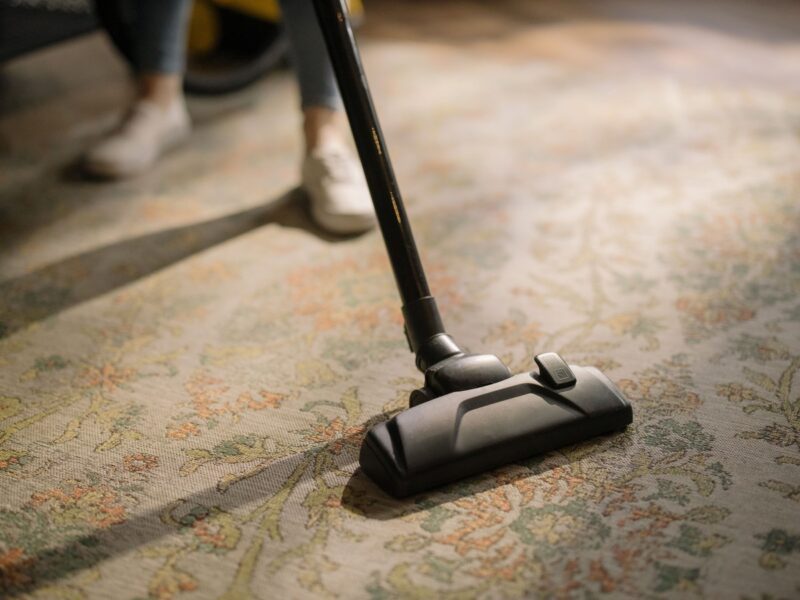
Equipment matters more than people expect. A high-efficiency vacuum with strong airflow and a proper brush head pulls embedded grit from the base of the pile, not just the tips. Cheap vacuums with worn brushes polish the surface and leave the real dirt behind. Check your machine’s brush strips every few months — a worn brush on a 12-inch head is basically a broom with extra steps.
Direction matters too. Push the vacuum in consistent, overlapping passes rather than scrubbing back and forth in random patterns. Back-and-forth scrubbing distorts the pile, fuzzes the face fibers, and creates the shading and streaks that make a two-year-old carpet look ten. On cut-pile and Axminster carpets, which have a directional pile, vacuum with the lay of the fiber where the manufacturer specifies it. A quick walk-through with the crew lead once a month catches bad habits before they become visible wear.
“We had a housekeeping team that vacuumed the lobby three times a day and it still looked tired after 18 months. Turned out they were using vacuums with shot brushes and no HEPA filtration, so they were just pushing dust around. Swapped to proper commercial units, retrained the crew on overlapping passes, and the same carpet is now in year four and still reads as new to guests.” — Facilities Manager, 220-room hotel
Rotating Carpet Every Three Months to Even Out Wear
High-traffic zones don’t wear evenly. The path from the door to the reception desk takes ten times the punishment of the corner by the window, and over time that shows up as flattened pile, darkened lanes, and pressure marks that no amount of vacuuming will fix. Rotation is the low-tech answer: shift rugs and area carpets roughly every three months so foot traffic spreads across the whole surface.
Not every installation allows rotation, of course. Broadloom glued down in a corridor isn’t going anywhere. But area rugs, loose-laid carpet tiles, and modular systems in offices and event spaces can and should be rotated on a quarterly schedule. For carpet tiles, the smart play is to lift and rotate tiles between high- and low-traffic positions, and keep a box of spares on hand to swap out the worst tiles rather than replacing a whole field.
The payoff is measurable. A quarterly rotation on a 12-by-15-foot area rug in a hotel lobby can add two to three years of usable life before replacement, which on a $3,000 rug is real money. It also keeps the appearance uniform, so the floor doesn’t develop that patchy, worn-out look that makes guests assume the property is poorly maintained. For larger installations, a commercial carpet size guide helps you plan coverage and spare stock before you order, so rotation stays practical from day one.
Immediate Spot Treatment with Neutral Cleaners
Spills happen — coffee at the breakfast bar, red wine at a reception, a dropped smoothie in the gym. The single biggest factor in whether a stain becomes permanent is time. A fresh spill blotted within five minutes usually lifts completely. The same spill left overnight can wick into the backing and set, and at that point you’re looking at a permanent shadow or a patch job.
The technique matters as much as the speed. Blot from the outside edge toward the center so you don’t spread the stain outward. Never scrub — scrubbing pushes the substance deeper and fuzzes the fiber. Use a clean white towel so you can see what’s still coming up, and keep changing to a fresh section as it absorbs.
Cleaner choice is where a lot of buildings go wrong. Stick with neutral-pH cleaners unless the carpet manufacturer says otherwise, and match the product to the fiber. Wool and solution-dyed nylon tolerate different chemistry, and a strong alkaline or solvent cleaner on the wrong fiber can bleach or dissolve the color. Always test on a hidden patch first — a 10-minute test behind a baseboard beats a $2,000 repair. Our guide on spot cleaning commercial carpet covers the edge cases most crews miss, including wicking, dye transfer, and the stains that look gone until the carpet dries.
- Blot, don’t scrub — work from the edge of the stain toward the center
- Use a neutral-pH cleaner matched to the fiber type
- Test on an inconspicuous area and wait 10 minutes before full application
- Rinse with clean water and blot dry; pile a white towel and weight it overnight for deep stains
- Log every spill and treatment so patterns (same spot, same cause) get fixed at the source
Steam Cleaning for Deep Stains and Bacteria Removal
Vacuuming handles dry soil, but it can’t touch the oils, grease, and biological residue that build up in the pile. That’s where steam cleaning earns its place. High-temperature steam (typically 150–200°F at the nozzle) penetrates the fiber, loosens embedded soil, and lifts it out with a strong extraction pass. It also kills a meaningful share of bacteria, dust mites, and allergens that a vacuum leaves behind — a real consideration in gyms, clinics, childcare rooms, and anywhere with allergy-sensitive occupants.
The mistake with steam is over-wetting. Push too much water into the carpet and you get a backing that stays damp for 24–48 hours, which invites mold, delamination, and that musty smell guests notice immediately. The fix is simple: use the machine’s extraction setting properly, do multiple dry passes, and don’t move furniture back until the carpet is dry to the touch. On a typical commercial job, drying should take 4–8 hours with good airflow, not two days.
How often? For most offices, a steam or hot-water extraction pass every 6–12 months is sensible. High-traffic hospitality spaces may need it every 3–4 months. If you’re working with a specific carpet construction, check the manufacturer’s cleaning recommendations first — some wool and natural-fiber products have temperature limits, and the wrong method voids the warranty. Our commercial carpet cleaning field manual walks through the method-by-fiber matrix so your crew isn’t guessing.
Professional Deep Cleaning as a Periodic Investment
In-house crews can handle weekly vacuuming, spot treatment, and rotation. What they usually can’t do is the deep restorative work — and that’s where a scheduled professional visit pays for itself. A professional service brings truck-mounted or high-powered portable extraction equipment, assesses the carpet’s condition, identifies problem zones, and applies the right chemistry for the fiber and soil type.
Budget-wise, professional deep cleaning typically runs $0.15 to $0.40 per square foot depending on method and market. On a 5,000-square-foot office floor, that’s roughly $750 to $2,000 per visit — a fraction of what replacing the same floor would cost. For most commercial spaces, one to two professional deep cleans a year, timed around heavy-use seasons, keeps the carpet in genuinely good condition.
There’s a warranty angle too. Many commercial carpet manufacturers require documented professional cleaning at specified intervals to keep the wear and stain warranties valid. Skip it and you may find that a premature failure claim gets denied. Keep invoices and service logs — they’re the paper trail that protects your investment. If you’re specifying new carpet for a project, talk to the supplier about recommended cleaning schedules up front; our team at contacts can point you to the right maintenance guidance for each product line.
Building a Carpet Maintenance Calendar That Actually Gets Followed
Knowing the techniques is one thing; getting them done on a busy property is another. The maintenance plans that survive contact with real operations are the ones written into a calendar with named owners, fixed frequencies, and a simple log. Without that structure, vacuuming slides when the crew is short-staffed, spot treatment waits until morning, and the professional deep clean gets pushed to “next quarter” indefinitely.
Here’s a concrete example of what a workable calendar looks like for a 120-room select-service hotel with roughly 8,000 square feet of public-area carpet — lobby, breakfast area, corridors, and elevator landings. The housekeeping lead owns daily vacuuming of the lobby and breakfast zone (two passes, overlapping, with the two commercial uprights kept on the property). Corridors get vacuumed Monday, Wednesday, and Friday. The maintenance supervisor owns the quarterly rotation of the six area rugs in the lobby and breakfast area — a two-person job that takes about three hours and costs nothing beyond labor already on the clock. Front-desk staff handle spot treatment immediately using a stocked spill kit (neutral cleaner, white towels, a spray bottle, and a spill log) kept behind the desk; the kit refill runs about $60–$80 every two months. Steam extraction of the breakfast area and elevator landings happens twice a year, in March and September, at roughly $0.25 per square foot — about $900 per visit for the 3,600 square feet involved. A full professional deep clean of all public areas runs once a year in January, the slowest week of the year, at roughly $0.30 per square foot — around $2,400.
Total annual spend lands near $4,500–$5,000, or about $0.60 per square foot per year. Compare that to replacing the same 8,000 square feet of mid-grade commercial broadloom at $6 per square foot installed — roughly $48,000, plus the disruption of closing public areas during installation. The calendar pays for itself many times over, and the spill log does double duty: after six months it will show whether the same three spots keep getting hit, which usually points to a fixable cause like a missing entry mat or a badly placed coffee station. Review the calendar quarterly, adjust frequencies to actual traffic, and keep every invoice and log entry — that documentation is what keeps warranties intact and turns “we think we clean it regularly” into a defensible maintenance record.
One more note for specialty spaces: installations like putting greens and synthetic turf need their own routine, and the same logic applies. A 15mm outdoor mini golf carpet, for example, benefits from regular brushing and rinsing to keep the surface consistent and free of debris — different tools, same principle of consistent care.
The pattern across every failing carpet is the same: someone treated cleaning as an afterthought, let soil work into the pile, and then blamed the product when the floor wore out early. Layering the methods — weekly vacuuming with the right equipment, quarterly rotation where the installation allows it, immediate spot treatment with neutral chemistry, periodic steam extraction, and scheduled professional deep cleans — gives you a floor that stays presentable for its full service life and often well beyond. Match the frequency to your traffic levels and fiber type, write it into the maintenance contract, and track it. A carpet that’s cared for consistently doesn’t just look better; it postpones the replacement invoice by years, and that’s the number your finance team actually cares about.