
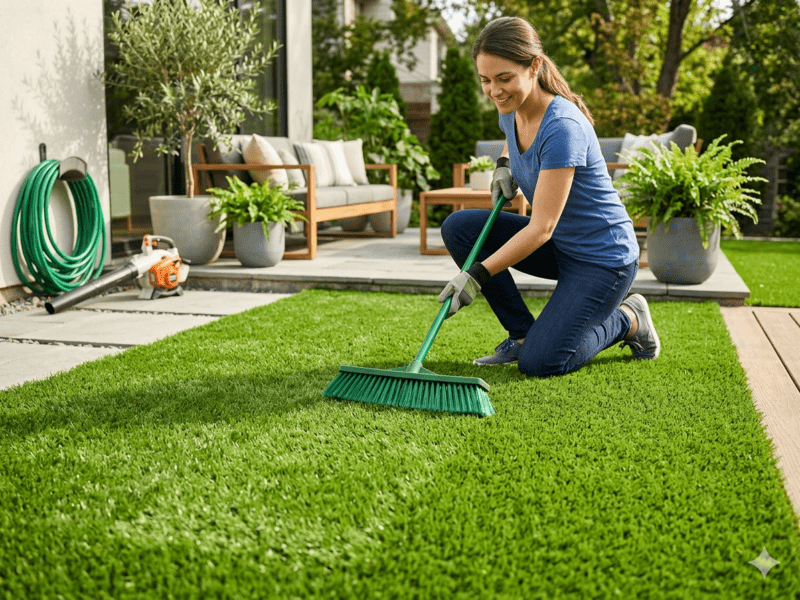
“Is artificial grass truly maintenance-free?”
As a manufacturer of high-quality synthetic turf mats, we hear this question daily. The honest answer? While you can definitely say goodbye to the lawnmower and the heavy water bills, a little “TLC” (Tender Loving Care) goes a long way. Proper upkeep doesn’t just make your lawn look lush; it significantly extends the return on your investment.
If you want to keep your turf in peak condition for years to come, here is everything you need to know about cleaning and maintaining your synthetic grass.
The 6-Step Quick Refresh
If you are short on time but want maximum impact, follow this streamlined routine to revitalize your turf in minutes:
- Clear the Surface: Use a leaf blower or a stiff-bristled broom to remove organic debris like leaves and twigs.
- Sudsy Solution: Mix water with a mild, pH-neutral soap. Avoid harsh detergents that can strip the fiber’s protective coating.
- Spot Scrub: Focus on high-traffic areas or visible marks using a soft brush.
- The Deep Rinse: Use a garden hose to wash away soap residue and fine dust.
- Air Dry: Let nature do the work. The drainage backing on quality mats will handle the runoff.
- Refresh & Sanitize: Apply a specialized turf deodorizer if you have pets or frequently host backyard BBQs.
Tackling Common Stains Like a Pro
Life happens—spilled wine, muddy paws, or dropped ice cream shouldn’t ruin your lawn. The secret is to act fast.
- Food & Drinks: A simple mixture of warm water and mild soap usually does the trick. Always rinse thoroughly afterward.
- The Pet Factor: For solid waste, let it dry before removal. For urine, rinse the area frequently. We recommend using a non-chlorine disinfectant to keep the area hygienic for kids and pets.
- Sticky Situations (Gum or Sap): Don’t try to scrape it off while it’s soft. Use ice cubes to freeze the substance until it’s brittle, then gently pop it off with a blunt tool.
- Oil & Paint: Blot (don’t rub!) immediately with an absorbent cloth. Use a specialized, turf-safe degreaser if the stain persists.
Manufacturer’s Warning: Never use bleach, ammonia, or caustic chemicals. These can cause permanent discoloration and weaken the synthetic fibers.
Essential Tools for the Modern Lawn
You don’t need a shed full of heavy machinery, but the right tools make a world of difference:
- The Power Brush vs. Manual Brush: For small patios, a stiff nylon brush is perfect. For larger landscapes, a power brush helps “re-bloom” the fibers, keeping them standing upright.
- Adjustable Hose Nozzle: Essential for a gentle rinse. High-pressure washers should be used with extreme caution to avoid displacing the infill.
- Garden Vacuums & Blowers: These are your best friends during the autumn months to prevent organic matter from decomposing within the grass blades.
Pro-Active Prevention: The Manufacturer’s Secret
Maintenance is easier when you prevent problems before they start. As experts in turf production, here are our top tips:
- Counter-Brushing: Regularly brush the grass against the grain. This prevents “matting” (when the grass lays flat) and keeps the lawn looking voluminous.
- The Weed Barrier: If you are installing turf over soil, a high-quality geotextile weed membrane is non-negotiable. It prevents pesky growth from poking through your drainage holes.
- Silica Sand Infill: While not always mandatory for mats, adding a layer of silica sand helps stabilize the blades and keeps the turf cool during hot summer days.
- Dust Control: In dry climates, a quick 2-minute rinse every week prevents dust buildup that can make the turf look dull.
Frequently Asked Questions (FAQ)
Q: How often should I sanitize my turf? If you have pets, we recommend a monthly deep clean. For decorative or low-traffic areas, once every 3 months is plenty.
Q: What happens when it rains? Our turf is designed with a high-permeability backing. The water will drain naturally through the system—just let it air dry.
Q: Is it safe for my kids? Absolutely. By using neutral soaps and avoiding harsh chemicals, your artificial grass remains a safe, allergen-free environment for the whole family.
The Bottom Line
At the end of the day, artificial turf is an investment in your home’s aesthetics and your personal free time. By following these simple steps, you ensure that your “evergreen” lawn stays truly green for a decade or more.
Looking for high-durability turf mats for your next project? Browse our latest collection or contact our technical team for expert advice!