
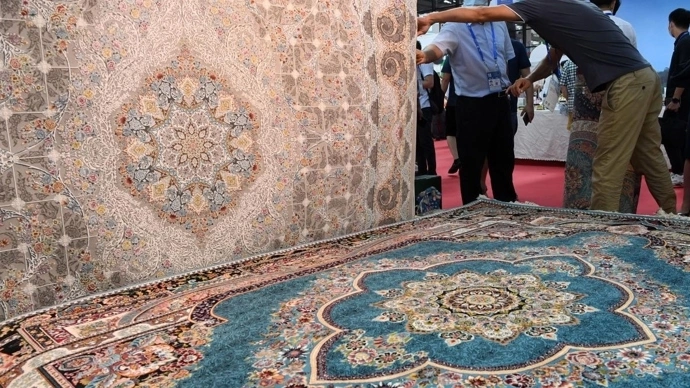
The Unrepeatable Cultural Loop of Pakistani Hand-Knotted Carpets
In an era where globalization pushes home decor toward sterile, mass-produced standardization, there is a quiet rebellion happening underfoot. It is the art of the Pakistani hand-knotted carpet—a tradition spanning five millennia that refuses to be rushed.
As a manufacturer specializing in custom area rugs and carpets, we see these pieces not just as floor coverings, but as “woven stories.” To understand why a Pakistani rug is a premier choice for high-end interiors, one must look at the “cultural loop” that makes them impossible to replicate by machine.
A Legacy Carved by Emperors
The roots of this craft reach back to the Indus Valley Civilization (3000 BC), but the “Golden Age” arrived in the 16th century. Under the patronage of the Mughal Emperor Akbar, the finest weavers from Persia were brought to Lahore and Agra.
By blending Persian knotting techniques with South Asian naturalism, they birthed iconic styles like the Shikargah (Hunting) and Gulistan (Garden) patterns. While neighboring India shifted toward indigenous religious motifs, Pakistani weavers maintained a focus on Bukhara, Persian, and Caucasian aesthetics, creating a distinct identity of “rugged elegance” that persists today.
A Regional Map of Artistry
Pakistan’s geography dictates its rug styles, creating four distinct hubs that we draw inspiration from for our custom designs:
- Peshawar (The Tribal Heart): Known for vibrant reds and deep blues, these rugs use local high-quality wool to depict organic, symmetrical floral patterns. They are the soul of nomadic heritage.
- Lahore (The Imperial Legacy): The bridge between ancient and modern. Lahore rugs often incorporate silk for a shimmering finish, utilizing intricate geometric patterns that fit perfectly in minimalist, contemporary homes.
- Karachi (The Innovation Hub): This is where tradition meets the “now.” Karachi designs are bold and experimental, catering to the cosmopolitan demand for custom carpets that pop.
- Multan (The Earthbound Durable): Renowned for their incredible longevity, Multan rugs use warm, earthy tones. They are the workhorses of the rug world—equally at home in a rustic farmhouse or a sleek Japanese-style office.
The Secret is in the Wool (and the Wash)
Why choose a Pakistani wool rug over a silk-heavy Indian alternative? It comes down to the altitude. High-altitude Pakistani lambs yield a wool that is exceptionally soft yet incredibly resilient. This “soft-strength” allows the rug to hold its color for decades while standing up to heavy foot traffic.
The process is grueling. A single custom area rug can feature millions of hand-tied knots and take anywhere from several months to three years to complete. But the real magic happens at the end: the traditional washing process. This manual scouring, which no machine has ever successfully imitated, gives the wool its signature “living” luster.
Investing in a “Talking” Art Piece
In every knot, there is a meaning. Floral patterns represent the vitality of life; geometric lattices symbolize the order of the universe. When you commission a custom carpet, you aren’t just buying a product; you are preserving a community memory and bringing a piece of the South Asian landscape into your home.
At our facility, we honor this “closed cultural loop.” We combine the ancient “Shepherding-Selecting-Weaving-Washing” cycle with your specific design visions. In a world of fast fashion, these rugs stand as a testament to the eternal value of the human hand.