
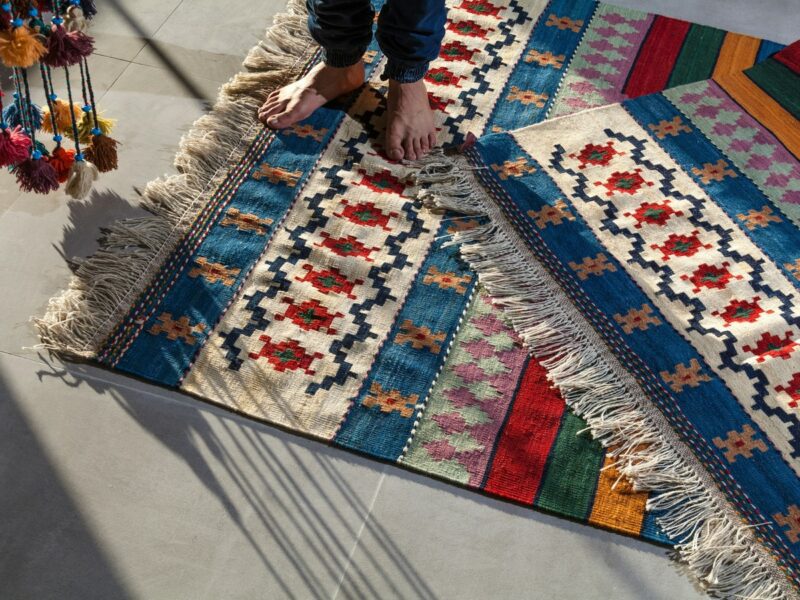
Summer flooring decisions get rushed. A hotel renovation wraps in June, an office fit-out hits its deadline, and someone orders “something light and cool-looking” without checking what the material will do under 300 people a day. Six months later the edges are curling, the color’s gone patchy from window light, and the replacement quote lands on a budget that already closed.
That’s the pattern we see most. The brief is aesthetic — pale blue, sage green, sandy neutrals — and the specification work that actually determines lifespan never happens. Color matters, sure. But for a commercial space, the summer question isn’t “what looks fresh in July?” It’s “what still looks acceptable in the third July?”
This guide walks through how to pick warm-season flooring for hotels, offices, gyms, and public buildings without paying twice — once at purchase, once at replacement.
Key Selection Criteria
Forget season-first thinking. In commercial settings, five variables drive 90% of the outcome. Get these right and the color palette becomes an easy, low-risk decision on top.
- Traffic level and soil type. A lobby with street-level entry takes grit, salt, and oil. A gym takes rubber crumb, sweat, and chalk. A hotel corridor takes luggage wheels and cleaning-cart traffic. Each one stresses fiber differently.
- Fiber performance. Solution-dyed nylon holds color under UV and aggressive cleaning. Polypropylene resists moisture and stains but crushes faster under point loads. Wool blends look premium and wear well but cost more upfront and need careful drying.
- Pile height and construction. Loop pile in a tight gauge handles rolling loads. Cut pile feels softer but shows tracking. For warm months, a lower pile isn’t just cooler-looking — it’s easier to extract moisture from after cleaning.
- Backing and moisture control. This is where most summer installs fail. Humid air plus a slab with no vapor barrier equals delamination, mold odor, and adhesive failure within 12–18 months.
- Cleaning method compatibility. If your housekeeping team only has a scrubber and a wet vac, don’t specify a material that needs dry extraction. Match the spec to the equipment you actually own.
One more: budget for the whole cycle, not the square meter price. A carpet at $18/m² that lasts four years is more expensive than one at $28/m² that lasts ten. We’ll come back to that math.
Top Recommendations
Here’s how the main options stack up for warm-weather commercial use. None of these is universally “best” — the right pick depends on the room.
Solution-dyed nylon in a low loop pile. This is the default for hotel corridors, offices, and conference areas. It resists fading, handles repeated hot-water extraction, and bounces back from chair casters. Expect 8–12 years in a mid-traffic office, 5–7 in a heavy corridor. If you want pattern flexibility for hospitality interiors, browse the Axminster carpet range, which gives you custom design without giving up durability.
Cushioned carpet tiles. For offices and schools, tiles solve two summer problems at once: individual squares can be swapped when a spill or AC leak ruins one, and the cushion backing adds underfoot comfort without a separate pad. The catch is adhesive and backing quality — cheap tiles lift at the corners in humidity. Our breakdown of choosing commercial cushioned carpet tiles without overpaying covers where the cost actually sits.
Polypropylene for wet or outdoor-adjacent zones. Pool decks, entry mats, covered terraces, and gym transition areas. It won’t absorb water, won’t stain from chlorine or sunscreen, and cleans with a hose. It also has the lowest UV resistance of the common fibers, so keep it out of direct sun unless it’s stabilized for outdoor use.
Artificial turf for recreational surfaces. Mini-golf, rooftop putting greens, and play areas need something that drains and doesn’t turn into a sponge. A 15mm specification like this outdoor mini golf carpet is built for exactly that — standing water drains through, and the surface stays playable after rain.
Wool and wool-blend for premium lobbies. Beautiful, naturally flame-resistant, and it regulates humidity. But it needs a dry, well-ventilated space and a cleaning contractor who knows wool. In a humid coastal property with no dehumidification, it’s a risk.
If you’re weighing fiber options for a specific building, the nylon vs polypropylene comparison for facility managers goes deeper on cost per year and failure modes.
“We replaced 1,400 m² of light-colored loop pile in a resort corridor after two summers. The fiber was fine — the problem was the slab. No vapor barrier, and the adhesive let go along the whole west-facing run. Second time around we spent 9% more on moisture testing and a proper barrier, and it’s held for five years. The carpet was never the issue.”
— Facilities manager, 220-room coastal hotel
Mistakes That Cost You Twice
The expensive mistakes aren’t about picking the wrong shade of blue. They’re structural, and they show up after the warranty conversation is over.
Specifying on appearance alone. A designer picks a pale, low-density cut pile because it photographs well. Eighteen months of luggage traffic later, it’s matted flat in a visible path down the middle of the corridor. The fix is a denser, tighter construction — same color, different build.
Ignoring relative humidity in the building. If your space runs above 65% RH in summer and you’re laying carpet directly on concrete, you’re gambling. Adhesive softens, seams open, and mold colonizes the backing. Test the slab first. A calcium chloride test takes about 60–72 hours and costs roughly $150–$400 per test location depending on the lab — cheap insurance against a $30,000 replacement.
Buying on square-meter price. Here’s the math that matters. Option A: $16/m², replaced every 4 years. Option B: $27/m², replaced every 10 years. Over 20 years, Option A costs $80/m² in material alone plus three extra installation cycles at maybe $9/m² each. Option B costs $54/m² plus one extra install. Option A looks cheaper on the quote and costs more than double over the life of the building.
Skipping the transition and edge details. Stairs, thresholds, and elevator lobbies fail first. If the spec doesn’t include matching edge bindings and a plan for stair nosings, you’ll be patching odd corners with whatever’s available.
Forgetting the cleaning contract. A carpet that needs hot-water extraction every quarter but only gets vacuumed twice a week will fail early regardless of quality. Align the material with the maintenance you’ve actually funded. For low-maintenance zones, our guide to no-wash commercial carpet explains where that approach works and where it doesn’t.
Ordering without attic stock. Always buy 5–8% extra. Dye lots change, and a single damaged tile or a stained 3 m² section shouldn’t trigger a full-floor replacement.
Why This Decision Follows You for a Decade
Flooring is one of the few building decisions you can’t quietly undo. Paint gets refreshed. Furniture gets swapped. But carpet is glued, stretched, and cut to fit — replacing it means emptying the space, disrupting operations, and paying for labor all over again.
That’s why the specification phase deserves more time than it usually gets. A hotel that chooses well gets 8–10 years of acceptable appearance. One that chooses on color swatches alone often re-does the job in 3–4. On a 2,000 m² property, that difference is easily six figures across a decade.
It also affects how the building feels to the people in it. Worn, tracked, faded flooring reads as neglect, even when everything else is well maintained. Guests and tenants notice it before they notice the lighting or the furniture. The reverse is true too — a floor that still looks crisp in year seven quietly signals that the place is managed well.
So treat the summer refresh as a ten-year decision, not a seasonal one. Get the fiber, backing, and subfloor right, and the color palette becomes the easy part.
The Subfloor Nobody Checks
This is the section most buyers skip, and it’s the one that causes the most failures we hear about.
Before any carpet goes down, the concrete slab needs three things verified: moisture emission, pH, and flatness.
- Moisture emission. Measured in pounds per 1,000 sq ft per 24 hours. Most manufacturers cap warranty coverage around 3 lbs for standard adhesives, 5 lbs with a moisture-tolerant system. Above that, you need a vapor barrier or an epoxy moisture mitigation coating.
- pH. High-alkali slabs (above 10) break down adhesive. Test it. If it’s high, the mitigation is the same as for moisture — seal the slab.
- Flatness. Carpet hides minor unevenness, but not much. A slab that’s out by more than 3mm over 3m will telegraph through a low-pile tile and cause edge lifting. Self-leveling compound fixes it, but it’s a line item most quotes miss.
Do the testing before the order is placed, not after the material arrives on site. A 3-day delay for a moisture test is nothing compared to a failed installation that has to be torn out.
Also check for existing adhesive residue and any previous moisture damage. If a prior floor failed, the cause is still there until you address it.
Case Study: A 900 m² Office Refresh in a Humid Climate
To see how these principles play out in practice, here’s a scenario we see repeated constantly — a mid-size office in a humid, coastal-leaning climate that decides to refresh flooring in early summer.
The client: a 900 m² open-plan office and two meeting rooms in a building with single-glazed west-facing windows and a slab-on-grade foundation. Staff count is around 120, with peak foot traffic at the entry and around the coffee station. The building runs at roughly 68% relative humidity from June through September — high enough to matter, not high enough to be obvious.
The first quote the client received was for a light grey cut-pile polypropylene at $19/m² installed, chosen because it looked clean and modern in the showroom. Total project cost: roughly $17,100 for material and installation, plus $1,400 for old flooring removal. The timeline was quoted at five working days.
Before signing, the client ran a calcium chloride test on four slab locations. Results came back between 4.1 and 5.3 lbs — above the 3 lb threshold for standard adhesive, below the 5 lb ceiling for a moisture-tolerant system. Two of the four locations also tested at pH 10.4, which would attack standard adhesive within a year.
Revised specification: solution-dyed nylon in a low loop pile with a moisture-tolerant adhesive system, plus an epoxy moisture barrier on the slab. Material cost rose to $29/m², installation to $12/m², and the barrier added $6,800. Total project cost landed at roughly $43,700 — more than double the original quote.
That sounds like a bad outcome until you run the numbers forward. The original spec, given the slab conditions, would likely have failed at seams and edges within 18–24 months, triggering a full replacement. That replacement would have cost another $17,000–$19,000 in material and labor, plus the operational disruption of emptying the office a second time. Over a ten-year horizon, the client would have spent roughly $55,000–$60,000 on two cheap installations plus a partial repair cycle.
The revised spec is projected to hold 8–10 years with normal maintenance — quarterly hot-water extraction, daily vacuuming, and spot treatment at the coffee station. Total ten-year cost: $43,700 plus about $9,000 in cleaning, or roughly $52,700. Slightly cheaper than the “cheap” path, and with no mid-cycle disruption.
The takeaway isn’t that you should always spend more upfront. It’s that the slab conditions dictated the specification, and the slab conditions were invisible until someone tested them. A $600 testing budget changed the entire project scope — and saved the client from discovering the problem after the furniture was back in.
FAQs
What carpet colors work best for a commercial space in summer?
Lighter neutrals — warm grey, sand, soft beige — hide lint and reflect light without showing every mark the way pure white does. If you want color, put it in an accent rug or a patterned tile rather than a solid field. Solid pale colors show traffic lanes fast.
Is a thinner carpet better for warm weather?
Not automatically. Pile height affects how the space feels and how easy it is to clean, but durability comes from density and fiber, not thickness. A dense low loop will outperform a thick, loose cut pile every time in a commercial setting.
How often should commercial carpet be cleaned in summer?
High-traffic areas (lobbies, entries, corridors) want vacuuming daily and extraction every 8–12 weeks. Offices can stretch to every 16–20 weeks. Humid climates need faster drying after any wet cleaning — aim for under 12 hours with air movers, or you’ll grow odor.
Can I use outdoor-rated carpet indoors?
You can, and it’s often smart for transition zones, mudrooms, and pool-adjacent areas. It’s designed for moisture and UV, so it handles spills and humidity well. It just won’t give you the softness or design range of an indoor product.
What’s a realistic budget per square meter?
For commercial-grade solution-dyed nylon, expect roughly $20–$45/m² for material, plus $8–$14/m² for installation depending on subfloor prep and access. Artificial turf and polypropylene sit lower, premium wool and custom Axminster higher. Get subfloor testing quoted separately so it doesn’t disappear into a lump sum.
How much extra material should I order?
5–8% attic stock for standard installations, 10% for patterned or custom-dyed goods where dye-lot matching is harder later.
If you’re working through a specific project — hotel, gym, office, or public building — you can reach the team here to talk through fiber, backing, and subfloor requirements before you commit to a spec.
Summer flooring doesn’t fail because someone picked the wrong shade of blue. It fails because moisture wasn’t tested, density wasn’t checked, and the cleaning plan was an afterthought. Fix those three things and you can choose almost any color you like — and still be happy with it in year eight.
Start with the subfloor. Then the fiber. Then the color. In that order, the decision holds up.