
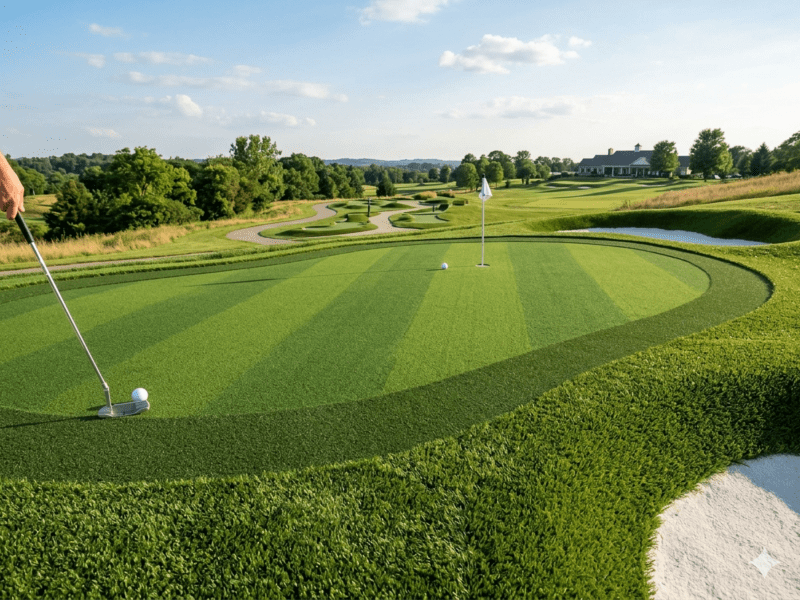
Home golf setups, commercial putting greens, and low-maintenance landscaped patios have surged in popularity. Whether you are a commercial property developer planning a professional miniature golf turf or a retailer sourcing durable outdoor grass mats for residential use, navigating the technical specifications of artificial turf matters.
As a direct manufacturer, we see firsthand how choosing the wrong material can ruin an installation. Here is a definitive guide to understanding the differences between specialized golf green synthetic grass and standard utility turf, helping you select the exact product for your project.
The Technical Difference: Golf Green Synthetic Turf vs. Standard Artificial Grass Carpet
A common misconception is that all synthetic turf is created equal. We frequently talk to buyers who wonder if they can use a standard artificial grass carpet to build a backyard putting green.
The short answer is: you can, but your golf ball won’t roll properly.
Landscape turf and specialized golf surfaces serve completely different functions:
- Landscape Turf / Outdoor Grass Mats: Designed to look and feel like lush, natural lawn. They feature longer, multi-directional blades that cushion your feet but absorb the energy of a rolling golf ball.
- Golf Green Turf Grass: Engineered specifically for ball ballistics. It features short, tightly texturized, dense fibers (typically nylon or curled polyethylene) that stand vertically. This dense structure supports the weight of the ball, allowing for a true, predictable roll that replicates a natural country club green.
Factory Insight: The performance of golf green fake grass is measured by its “stimp speed”—the distance a ball rolls when released from a standardized ramp. Achieving an optimal stimp reading requires a specialized texturized manufacturing process that standard artificial grass mats simply do not undergo.
Comparing Turf Types for Your Project
To help you choose the right product line from our factory catalog, here is a breakdown of how different synthetic surfaces compare in performance and application:
| Product Type | Primary Materials | Pile Height | Best Used For |
| Golf Green Synthetic Turf | High-Density Texturized PE or Nylon | 12mm – 15mm | Professional putting greens, backyard golf setups, training facilities. |
| Mini Golf Turf / Miniature Golf Turf | Texturized Polypropylene / Durable PE | 10mm – 13mm | High-traffic commercial mini-golf courses, amusement parks, family entertainment centers. |
| Outdoor Grass Carpet | Standard Polypropylene | 5mm – 8mm | Budget-friendly patios, temporary exhibits, balcony flooring. |
| Artificial Grass Mat / Utility Matting | Polyethylene + Rubber Backing | Varies | Small retail door entryways, pet relief zones, fitness equipment underlayment. |
Key Performance Factors to Look For
When sourcing bulk quantities of an outdoor grass mat or premium golf turf, keep these manufacturing specifications in mind to ensure long-term durability:
1. UV Stabilization
All of our synthetic products are treated with advanced UV stabilizers during the extrusion process. Without this, an outdoor grass mat outdoor installation will fade, become brittle, and crack within a few seasons of intense sunlight exposure.
2. Gauge and Stitch Rate
For a high-performing golf green turf grass, a higher stitch rate is crucial. The closer the stitches are together, the denser the surface, which translates directly to a smoother putting experience and less structural deformation over years of heavy foot traffic.
3. Drainage Efficiency
An excellent outdoor grass mat must handle heavy downpours without puddling. Look for turf featuring a porous polyurethane backing with engineered drainage holes. This ensures that the green dries quickly after rain, preventing mold growth and allowing players back on the course almost immediately.
Installation Tips for a Flawless Surface
Even the highest-grade artificial grass mats will perform poorly if installed over a bad sub-base. For a flawless, professional finish, remember these three steps:
- Excavate and Compact: Remove the native soil and lay down a 3-to-4-inch base of crushed aggregate. Compact it thoroughly to eliminate any future settling.
- Seam Sealing: When joining sections of artificial grass carpet, use high-tensile infill tape and weather-resistant turf adhesive to ensure the seams do not pull apart under foot traffic.
- Infill Selection: Premium golf greens typically require a rounded silica sand infill. This sand sinks between the texturized fibers to hold the turf down, keep the blades standing upright, and allow you to customize the ball roll speed.
Whether you need heavy-duty outdoor grass mats for high-traffic commercial use or premium golf green synthetic grass engineered for the perfect putt, sourcing directly from the manufacturer guarantees custom specification control, consistent quality, and competitive bulk pricing.